
Moss & Algae Removal Services
Moss and algae removal is crucial for maintaining the structural integrity and visual appeal of roofs. Over time, these growths can damage roofing materials and cause moisture retention, leading to leaks and decay. Effective removal involves specialised cleaning techniques suited to various surfaces, such as roof tiles and concrete, ensuring thorough demossing and reducing future regrowth risks. Opt for low pressure or soft wash methods to safeguard delicate roofing, accompanied by treatments to kill and prevent moss and algae on diverse surfaces like tarmac and flat roofs.
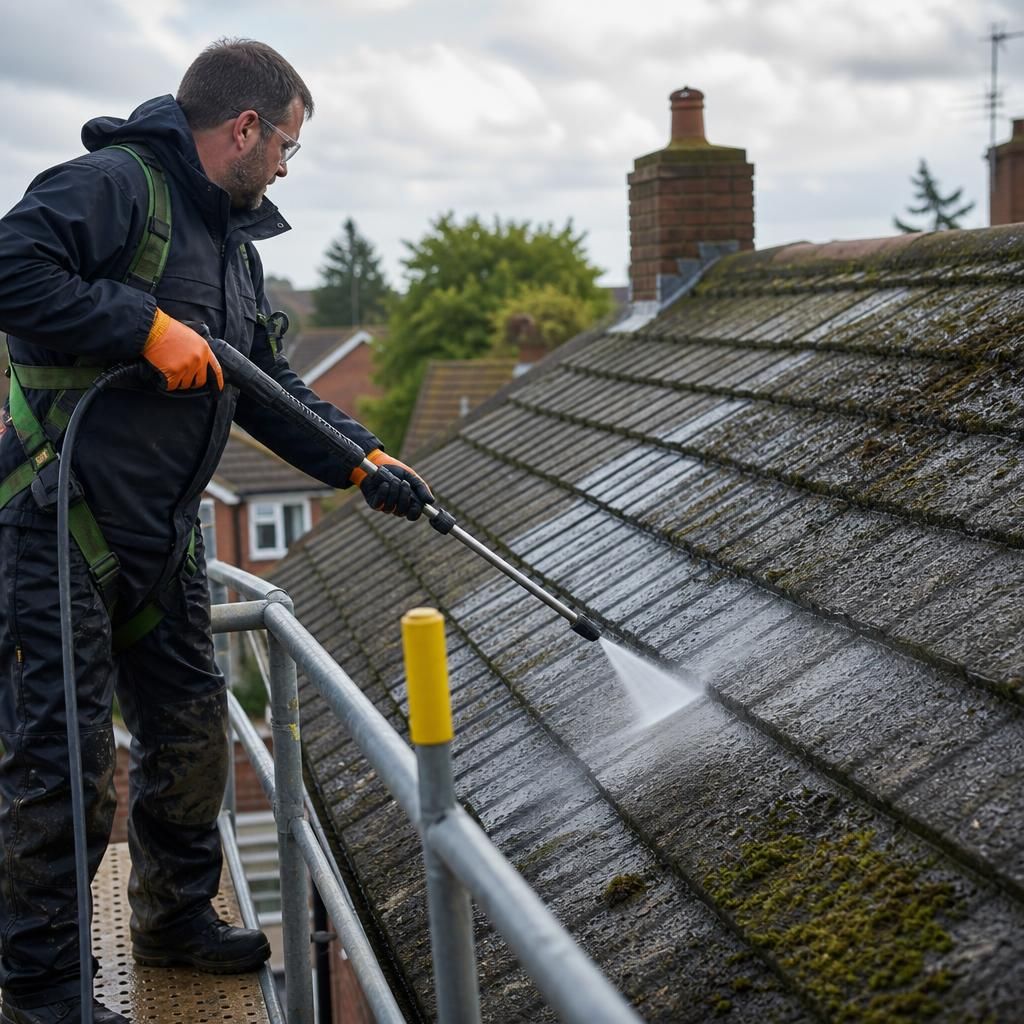
Understanding Moss & Algae Removal Techniques
Moss and algae thrive in damp, shaded environments and their presence on roofs can lead to structural damage. They hold moisture against roofing materials, which may result in decay and leaks over time. Removal involves specialised techniques tailored to the surface type, such as concrete or roof tiles, to effectively eliminate these growths without damaging the underlying materials.
Low pressure or soft wash methods are often recommended for delicate roofs to avoid unnecessary wear and tear. These techniques combine gentle water application with specific cleaning solutions that kill existing moss and algae while preventing future growth. These processes ensure thorough demossing and maintain the integrity of the roofing materials.
It’s important to consider ongoing maintenance to manage moss and algae regrowth. Applying treatment solutions that inhibit growth can prolong the lifespan of your roof and improve its appearance. Therefore, understanding these removal techniques is essential for anyone looking to maintain their roofing structures effectively.
Frequently Asked Questions about Moss & Algae Removal
What are the differences between low pressure and soft wash methods for moss and algae removal?
Professional moss and algae removal prolongs roof lifespan by preventing decay and leaks. It involves specialised soft wash techniques that eliminate growths safely, preserving roofing materials without causing damage.
How long does the moss and algae removal process take?
The duration varies based on roof size, severity of growth, and chosen method, typically ranging from a few hours to a full day. Professional assessment ensures efficient, effective treatment tailored to your needs.
What safety measures are taken during the moss and algae removal process?
Technicians use safety gear like harnesses and helmets. They ensure compliance with industry standards, secure work areas to prevent debris-related hazards, and employ environmentally safe cleaning agents.
What are the costs associated with moss and algae removal services?
Costs depend on roof size, access difficulty and the extent of growth removal needed. Generally, commercial properties may incur higher costs due to larger areas and complex cleaning requirements.
What are the long-term benefits of regular moss and algae removal?
Consistent moss and algae removal extends roof lifespan by preventing material deterioration and unsightly growths. It also reduces maintenance costs, enhances property aesthetics, and minimises safety risks associated with slippery surfaces.
Trusted and Guaranteed Results for Moss & Algae Removal
Our moss and algae removal process offers trusted and guaranteed results. By utilising advanced techniques and carefully selected solutions, we ensure effective removal and long-lasting protection for your roof. Enhance your roof’s durability and aesthetic appeal with our professional services today.
Proven Expertise
Ranked among top UK cleaning services for moss and algae treatment, ensuring impeccable roof care and enduring protection.
Common Questions on Moss & Algae Removal
What are the benefits of using a soft wash method for removing moss and algae from roofs?
Specialised moss and algae removal techniques involve low-pressure washing and specific cleaning solutions to effectively eliminate growth without damaging roofing materials, safeguarding against moisture-related issues and extending roof life.
How often should roofs be treated for moss and algae removal?
Roofs should ideally be treated for moss and algae annually, especially in damp climates, to prevent accumulation and damage. Regular inspections help tailor treatment schedules based on specific environmental conditions.
What techniques prevent moss and algae from returning after removal?
Apply biocide treatments post-cleaning to inhibit regrowth, and ensure regular roof inspections. Use preventative solutions designed to suppress moss and algae proliferation, maintaining surface integrity and extending intervals between cleanings.
What safety measures are in place during moss and algae removal on roofs?
Trained professionals utilise safety harnesses and high-quality access equipment to ensure worker safety. Routine risk assessments and compliance with industry standards further enhance safety during the roof cleaning process.
What environmental factors contribute to moss and algae growth on roofs?
Moss and algae thrive in moist, shaded conditions, often exacerbated by overhanging trees and poor drainage. These environments provide the water and shelter needed for growth, leading to roof deterioration.
Understanding Moss and Algae Control Techniques
Moss and algae removal is essential for preserving the integrity of roofing structures. These organisms retain moisture, contributing to decay and leaks in roofing materials. Effective removal processes include specialised cleaning techniques that are gentle on surfaces like roof tiles and concrete.
Understanding the differences between low pressure washing and soft wash methods is crucial, as both offer unique advantages depending on roof material and condition. Regular treatment prevents regrowth, extending roof longevity and maintaining aesthetic appeal.
Simplifying Moss and Algae Removal on Roofs
Moss Growth Impact
Moss can retain moisture, leading to roof material decay and leaks, undermining structural integrity over time.
Algae and Slippage
Algae create slippery surfaces, posing safety risks on walkways, driveways, and roofs, requiring timely removal.
Soft Wash Technique
Ideal for delicate surfaces, soft washing employs lower pressures paired with cleaning solutions to eliminate growths without damage.
Preventative Treatments
Applying anti-moss and algae treatments prolongs roof life by preventing regrowth, ensuring sustained protection.
Different Roof Materials
Tailored cleaning methods are essential for varied roof types like tiles or shingles, ensuring effective moss and algae removal.
Safety in Cleaning
Using appropriate access equipment and techniques enhances safety during moss and algae removal, reducing accident risks.
Long-Term Maintenance
Regular inspections and cleaning extend roof lifespan by preventing moss and algae from establishing and causing damage.
Critical Questions for Effective Moss & Algae Management
What are the most effective methods for removing moss and algae from different roofing materials?
Consider the roof material's sensitivity, choose low pressure or soft wash methods, ensure treatments prevent regrowth, and verify expertise of service providers to protect and maintain the roof effectively.
What factors should be considered when choosing between low pressure washing and soft washing for moss removal on different roofing types?
Evaluate the roof's material and condition, potential water intrusion risks, effectiveness of each method for moss type, and access safety before choosing the most suitable cleaning approach.
How can ongoing maintenance help in preventing moss and algae regrowth on roofing surfaces?
Regular inspections and prompt cleanings are crucial. Apply preventative treatments to inhibit moss and algae growth, maintaining roof health and appearance while reducing long-term maintenance costs.
What are the benefits of applying biocides and other treatment options for long-term moss and algae prevention?
Biocides provide targeted eradication of moss and algae, reducing regrowth by disrupting reproductive cycles. They extend roof lifespan by protecting materials from degradation, ensuring surfaces remain clean and safe.
How do different roof conditions impact the selection of moss and algae removal techniques?
Roof conditions such as material type, age, and existing damage dictate the choice of removal method, ensuring effective cleaning while preventing further damage and extending the roof's lifespan.